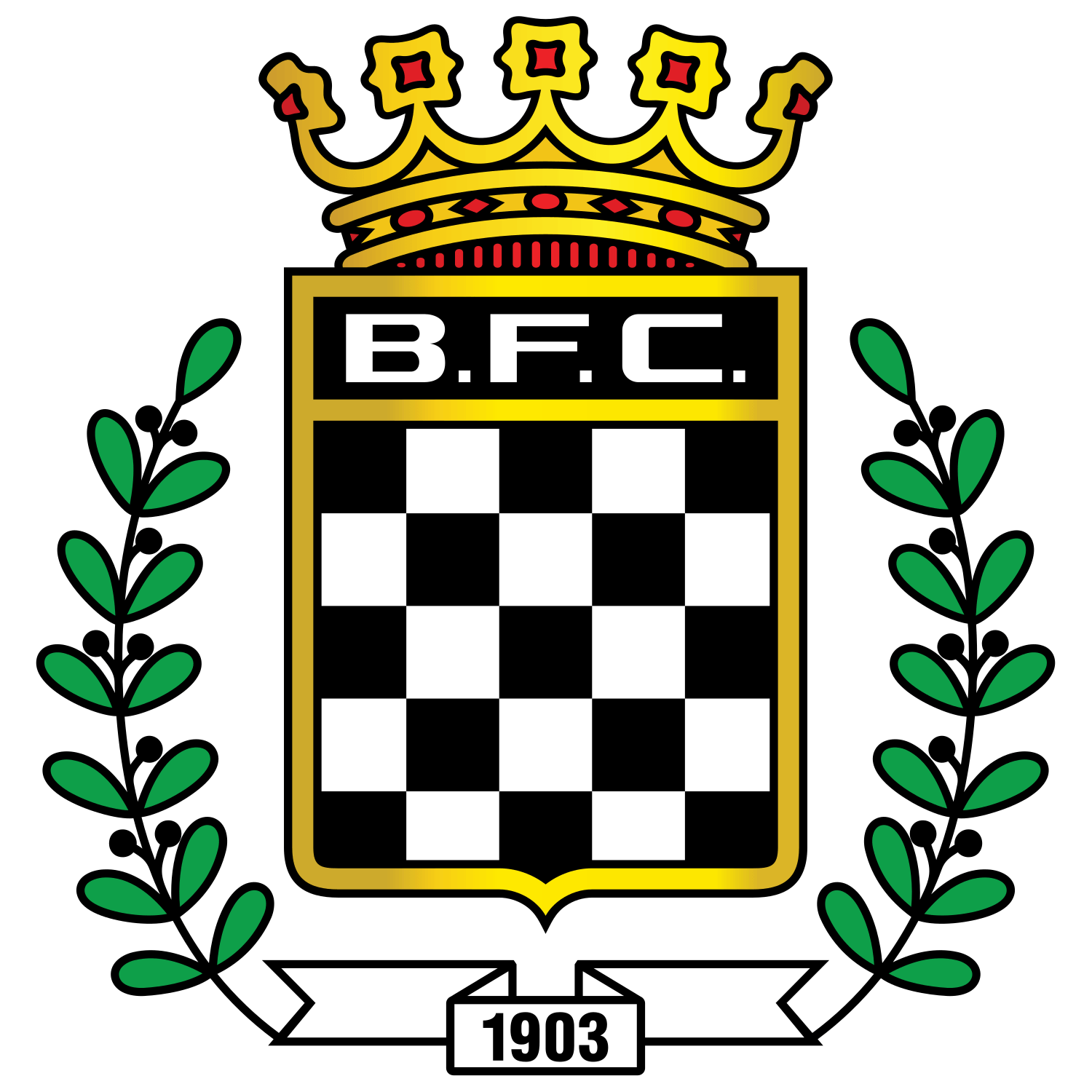
The crest is the black-and-white chequerboard that also defines the kit — an identity adopted in the 1930s, not an anchor or plain vertical stripes. The black panther is linked to the nickname As Panteras. The chequered pattern is the club’s most recognisable symbol in Portuguese football.
Founded on 1 August 1903 in Porto by English brothers (Harry and Dick Lowe) and textile workers, Boavista Futebol Clube — the Axadrezados, or Panthers — are the only Portuguese champions of the twenty-first century outside Benfica–Porto–Sporting: league winners in 2000/01. They added Taças de Portugal and European campaigns; the Estádio do Bessa was rebuilt for UEFA Euro 2004. After relegations and the SAD’s financial crisis in the mid-2020s, the parent club keeps the chequered identity in Bonfim. The black-and-white chequerboard, adopted in the 1930s, became Portuguese football’s most distinctive visual brand.
Fans — Boavista Futebol Clube
Boavista Futebol Clube is part of the THECLUB INDEX catalogue. This page celebrates the club identity, crest and home ground.
Founded in 1903, they play at Estádio do Bessa.
Use the LIKE button in the fan area above to show your support. Every fan counts in the official tally on this page.
The crest is the black-and-white chequerboard that also defines the kit — an identity adopted in the 1930s, not an anchor or plain vertical stripes. The black panther is linked to the nickname As Panteras. The chequered pattern is the club’s most recognisable symbol in Portuguese football.
Club history — Boavista Futebol Clube
Founded on 1 August 1903 in Porto by English brothers (Harry and Dick Lowe) and textile workers, Boavista Futebol Clube — the Axadrezados, or Panthers — are the only Portuguese champions of the twenty-first century outside Benfica–Porto–Sporting: league winners in 2000/01. They added Taças de Portugal and European campaigns; the Estádio do Bessa was rebuilt for UEFA Euro 2004. After relegations and the SAD’s financial crisis in the mid-2020s, the parent club keeps the chequered identity in Bonfim. The black-and-white chequerboard, adopted in the 1930s, became Portuguese football’s most distinctive visual brand.
The Estádio do Bessa (Bessa Século XXI after the Euro 2004 rebuild) stands in Bonfim, Porto, on ground used by the club since about 1910. The tournament reconstruction kept the club playing on site during the works. Capacity: 28,263. Stands close to the pitch and a Porto neighbourhood atmosphere.